
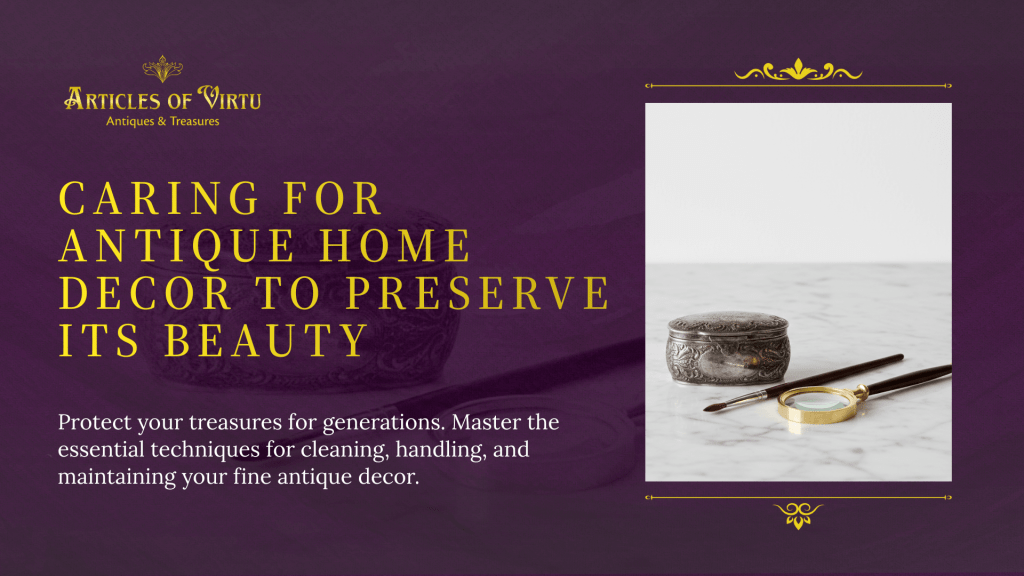
Proper care of antique home decor is essential for maintaining its aesthetic, structural integrity, and long-term value. By understanding cleaning techniques, environmental considerations, handling practices, and restoration principles, homeowners can protect their antiques and treasures while enjoying them in everyday life.
Antique home decor is not only visually captivating—it carries history, craftsmanship, and irreplaceable character. Unlike modern furnishings, antiques and treasures have aged gracefully over decades or centuries, developing a patina and personality that make them unique.
However, these qualities also make them delicate. Improper cleaning, exposure to harsh conditions, or careless handling can compromise their appearance and reduce value. Caring for antiques is not merely maintenance—it is stewardship, preserving both the beauty and historical significance of each piece for future generations.
Proper care allows homeowners to enjoy the warmth and elegance of antiques without worrying about long-term deterioration. With the right knowledge and practices, these objects remain a centerpiece in refined interiors for decades to come.
Maintaining antique home decor requires distinguishing between everyday cleaning and professional conservation.
Understanding the difference between routine care and professional intervention ensures antiques are preserved without accidental damage.
The environment plays a significant role in the preservation of antiques and treasures. Temperature, humidity, and light exposure all influence a piece’s longevity:
By monitoring the environment, homeowners create conditions where antique home decor remains structurally sound and visually vibrant.
Even well-cared-for antiques can suffer from mishandling. Proper techniques protect both the piece and the people moving it:
Thoughtful handling and strategic placement extend the life of antiques while maintaining their elegance and integrity.
Restoration and preservation serve different purposes, and understanding the distinction is critical:
A measured approach prioritizing preservation ensures antiques and treasures retain their value while remaining functional and visually appealing.
Even minor oversights can compromise an antique’s beauty and worth. Common mistakes include:
Avoiding these errors protects antiques for long-term enjoyment and investment.
The changing seasons in the U.S. can pose specific challenges to antique home decor:
Seasonal awareness and proactive measures help homeowners maintain antique home decor year-round.
Preserving antiques and treasures is an ongoing commitment. To ensure long-term enjoyment:
By combining routine care, environmental control, and expert guidance, homeowners can protect their antiques while keeping them at the heart of elegant, livable interiors.
For those seeking expert guidance in maintaining and caring for antique home decor, contact us to access curated advice and professional stewardship tailored to preserving the beauty and value of antiques and treasures.
1. How often should I clean antique furniture?
Light dusting weekly and careful polishing every few months is sufficient for most pieces.
2. Can I use modern cleaning products on antiques?
Only if they are specifically labeled safe for antiques. Avoid harsh chemicals, ammonia, and silicone-based products.
3. Is it safe to place antiques in direct sunlight?
No. Sunlight can fade finishes, fabrics, and painted surfaces over time.
4. Should minor scratches be restored immediately?
Not always. Minor wear adds character. Consult a professional before attempting restoration.
5. How do I protect antique textiles?
Store in cool, dry areas; avoid direct sunlight; and consider acid-free covers for seasonal storage.

Searching for antiques that tell a story? Connect with us to see our finest rare and collectible items.
Searching for antiques that tell a story? Connect with us to see our finest rare and collectible items.
Subscribe now to keep reading and get access to the full archive.