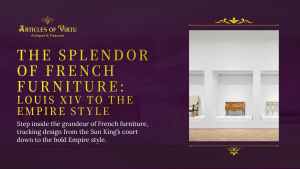
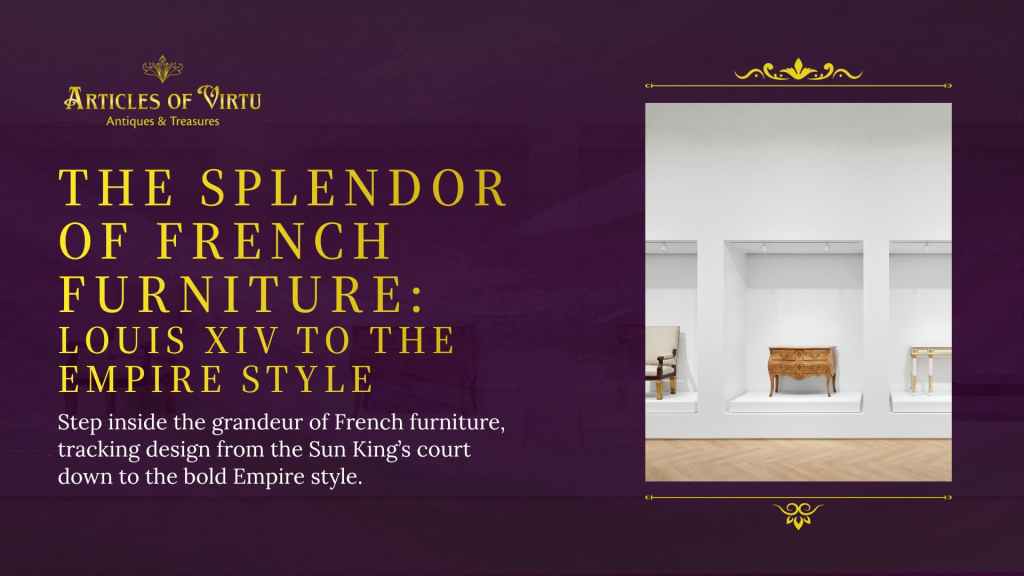
French furniture evolved through four major stylistic periods—Louis XIV, Rococo, Neoclassical, and Empire—each defined by political influence, artistic movements, and craftsmanship mastery. Understanding these eras helps collectors and enthusiasts identify authentic antique pieces and appreciate their enduring value in antique home decor and curated collections.
The world of French Furniture represents one of the most refined and influential traditions in global decorative arts. From royal palaces to modern curated interiors, French design has long symbolized elegance, prestige, and artistic mastery. For collectors of antique furnitures, enthusiasts of antique home decor, and admirers of European craftsmanship, French furniture offers a journey through centuries of cultural sophistication.
This evolution is not merely decorative—it is deeply historical. Each period reflects shifts in royal power, artistic philosophy, and societal taste. Within the broader world of antiques and treasures, French furniture remains one of the most sought-after categories due to its balance of beauty, structure, and storytelling.
In this guide, we explore the defining eras of French furniture and how they continue to influence antiques and collectibles in today’s luxury interiors.
The Louis XIV period (1643–1715), also known as the Sun King era, marked the birth of French furniture as a symbol of absolute monarchy and artistic dominance.
Furniture during this time was not simply functional—it was political expression.
Key characteristics of Louis XIV furniture include:
This era introduced the concept of furniture as part of a larger interior “stage” within palaces like Versailles. Every piece reflected power, discipline, and divine authority.
For collectors today, Louis XIV pieces or inspired designs represent the pinnacle of early French Furniture, often prized within high-end antique collectibles for their historical weight and craftsmanship.
As France transitioned into the 18th century, the rigid formality of Louis XIV gave way to the more intimate and playful Rococo style during the reign of Louis XV.
Unlike its predecessor, Rococo embraced:
This shift reflected a broader cultural movement toward leisure, intimacy, and emotional expression. Furniture became softer, more inviting, and deeply decorative.
Rococo remains one of the most admired styles in antique home decor, particularly for those seeking romantic elegance within interior spaces. Its graceful forms continue to influence modern interpretations of luxury furniture design.
By the late 18th century, the Rococo style was gradually replaced by Neoclassicism, a movement inspired by the rediscovery of ancient Greek and Roman art.
Neoclassical French furniture is defined by:
This period reflects a cultural shift toward reason, order, and intellectual clarity—values aligned with Enlightenment thinking.
Within the world of antique furnitures, Neoclassical pieces are highly respected for their timeless restraint and architectural precision. They are often seamlessly integrated into both traditional and modern interiors.
The Empire style emerged under Napoleon Bonaparte in the early 19th century, blending classical inspiration with imperial grandeur.
Unlike Rococo’s softness or Neoclassicism’s restraint, Empire furniture is bold and commanding.
Distinct features include:
This style was designed to communicate authority, stability, and national pride. It remains one of the most recognizable forms of French Furniture, especially valued by collectors of antiques and treasures for its historical and symbolic significance.
No exploration of French furniture would be complete without acknowledging the master artisans who shaped its legacy. Designers such as André-Charles Boulle, Jean-Henri Riesener, and other court-appointed craftsmen elevated furniture into fine art.
Alongside them, influential European makers like Thomas Chippendale (England) and Robert Adam were deeply inspired by French styles, further bridging continental design traditions.
These master makers contributed:
Their influence continues to define what collectors seek in authentic antique furniture today.
Today, French furniture remains a cornerstone of elegant interior design. Whether in restored estates or contemporary homes, these pieces bring sophistication and historical depth.
Designers often incorporate:
This blending of eras reflects the enduring appeal of French Furniture, especially within curated collections of antique home decor.
For collectors, integrating French antiques into modern spaces is not about replication—it is about balance, storytelling, and timeless beauty.
French furniture continues to captivate collectors and designers because it represents:
Within the broader world of antiques and collectibles, French pieces stand out for their elegance and historical narrative, making them enduring investments as well as aesthetic treasures.
The evolution of French Furniture from the grandeur of Louis XIV to the disciplined elegance of the Empire style reflects centuries of artistic mastery and cultural transformation. Each era contributes a distinct layer to the story of European design excellence.
For those exploring antique furnitures, building curated antique home decor, or expanding their understanding of antiques and treasures, French furniture offers both inspiration and lasting value.
To gain deeper insight, authentic guidance, and access to expertly curated pieces—contact us today to explore timeless French furniture and elevate your understanding of true antique craftsmanship.
The most meaningful antiques and treasures are those chosen with intention. Rather than following trends, consider how an object resonates with your personal values, your home, and your long-term vision. Pieces selected thoughtfully often become the anchors of a space or collection, gaining emotional significance over time.
Working with seasoned professionals can transform uncertainty into confidence. Thoughtful curation ensures each piece you acquire reflects discernment, quality, and enduring beauty—guiding you toward antiques and treasures that will be cherished for generations.
For collectors ready to explore antiques and treasures with confidence, contact us. Our expertise in sourcing, evaluating, and curating timeless objects provides the insight and support you need to make selections that endure in both style and significance. Begin your journey into a lifetime of refined, meaningful collections today.
1. What defines French furniture style?
French furniture is defined by its historical evolution through Louis XIV, Rococo, Neoclassical, and Empire styles, each reflecting distinct artistic and cultural influences.
2. Why is French furniture considered valuable?
It is highly valued due to its craftsmanship, royal heritage, artistic innovation, and strong demand in the global antique market.
3. What is the difference between Rococo and Neoclassical furniture?
Rococo emphasizes curves, ornamentation, and softness, while Neoclassical design focuses on symmetry, structure, and classical inspiration.
4. How can I identify authentic antique French furniture?
Look for hand-carved details, period-specific motifs, aged patina, and construction techniques consistent with historical craftsmanship.
5. Can French furniture work in modern interiors?
Yes. French furniture blends beautifully with modern interiors when used as statement pieces or paired with minimalist design elements.

Searching for antiques that tell a story? Connect with us to see our finest rare and collectible items.
Searching for antiques that tell a story? Connect with us to see our finest rare and collectible items.
Subscribe now to keep reading and get access to the full archive.