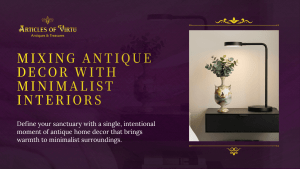
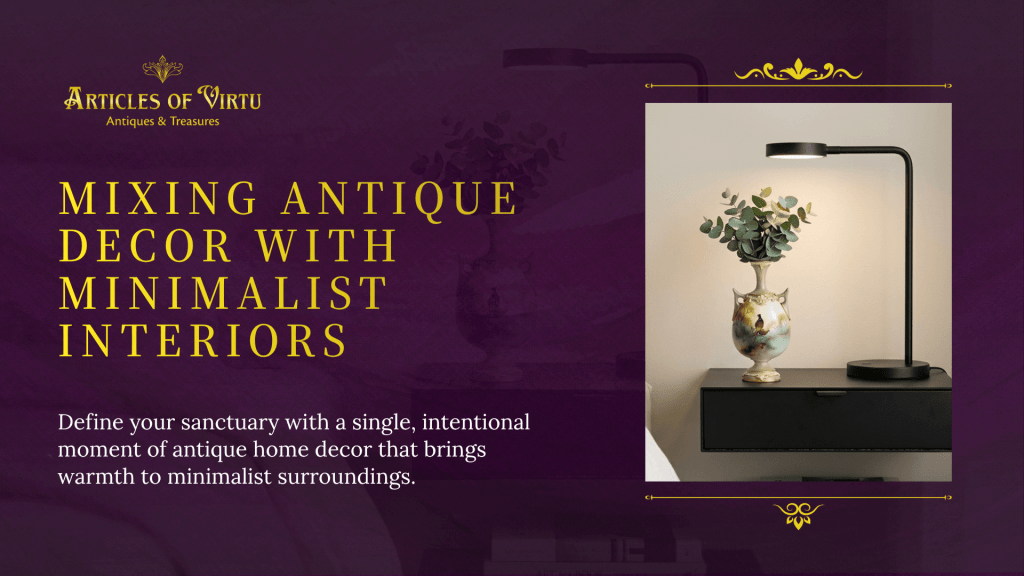
Antique pieces can enrich minimalist interiors, adding depth, personality, and timeless elegance. By selecting focal antiques, maintaining neutral color palettes, and balancing simplicity with curated treasures, you can create a serene and sophisticated home that bridges heritage and modernity.
Minimalist interiors are defined by simplicity, clean lines, and intentional use of space, yet they need warmth and character to avoid feeling sterile. Antique home decor introduces history, texture, and craftsmanship, creating a subtle narrative that complements modern design.
Rather than cluttering a space, carefully chosen antiques become focal points, infusing personality into a minimalist environment. A single well-crafted antique chair, a vintage sideboard, or a time-honored mirror can transform a restrained room into a curated sanctuary. The juxtaposition of sleek minimalism with antiques and treasures achieves an elegant balance that feels sophisticated and lived-in.
The secret lies in integrating antiques thoughtfully—each piece should have a purpose, whether functional, aesthetic, or sentimental, enhancing the minimalist philosophy of “less is more” while celebrating timeless heritage.
In minimalist interiors, every item must earn its place. Selecting focal antique pieces is crucial for blending history with modern simplicity.
Focusing on a few standout antiques allows the space to breathe, ensuring the room retains clarity while showcasing the artistry and craftsmanship of each piece. Learn more ways to style antique home decor in your interiors here.
The challenge of mixing antiques with minimalism is preserving the clean, uncluttered aesthetic. Consider the following principles:
Through intentional curation, antiques become storytelling elements that enrich the minimalist design rather than competing with it.
Color harmony is key when merging antiques with minimalist decor. Neutral tones—soft whites, greys, beiges, and muted pastels—create a serene backdrop that allows antiques to shine.
By grounding antiques in a neutral color palette, you maintain a minimalist feel while allowing your antiques and collectibles to speak through texture, form, and history.
Overcrowding a minimalist space with antiques undermines the style’s purpose. To prevent visual overload:
This restraint ensures each antique piece contributes meaningfully to the interior while preserving the airy, calm essence of minimalist design.
Antiques can be both beautiful and functional, making them invaluable in minimalist homes:
Functional antiques allow homeowners to embrace minimalism without sacrificing utility, integrating heritage seamlessly into everyday living.
Creating a cohesive minimalist-antique interior requires attention to scale, proportion, and placement:
These strategies create a curated environment where antiques and modern design coexist elegantly.
The ultimate goal is a harmonious interior that feels spacious, sophisticated, and reflective of personal taste. By carefully selecting antique furniture for sale, treasures, and collectibles, and integrating them with minimalist principles, homeowners can achieve:
For those seeking professional guidance to select and integrate antique home decor into minimalist interiors, expert curation ensures every choice adds lasting value and sophistication. Contact us to access curated antiques and treasures, and bring your minimalist-antique vision to life with confidence.
1. Can antiques work in modern minimalist homes?
Yes. Carefully selected antique pieces can serve as focal points, adding warmth and history without overwhelming the simplicity of a minimalist space.
2. How do I prevent antiques from making a room feel cluttered?
Limit the number of pieces per room, maintain negative space, and choose slim-profile or low-footprint antiques.
3. Which antique types complement minimalist interiors best?
Statement furniture, functional storage pieces, and select decorative accents like mirrors, vases, and framed collectibles work well.
4. How can I integrate color with antique pieces in neutral spaces?
Use neutral backdrops with natural wood, subtle metallics, or soft textile patterns from antique items to add warmth and visual interest.
5. Where can I find antique furniture suitable for modern minimal homes?
Trusted antique stores, curated online collections, and expert recommendations ensure quality and compatibility for minimalist interiors.

Searching for antiques that tell a story? Connect with us to see our finest rare and collectible items.
Searching for antiques that tell a story? Connect with us to see our finest rare and collectible items.
Subscribe now to keep reading and get access to the full archive.