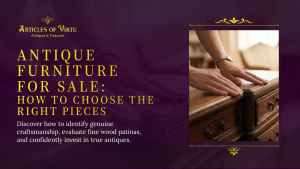

Curated antiques are chosen for craftsmanship, provenance, and enduring appeal—not trends. Thoughtful curation prioritizes quality over quantity, balancing beauty with historical significance. This approach transforms antiques and treasures into meaningful, lasting pieces for refined collections and interiors.
In the refined world of antiques and treasures, curation is both an art and a discipline. Behind every thoughtfully assembled collection lies a process guided by experience, restraint, and a deep respect for history. Unlike mass acquisition, true curation focuses on selecting pieces that resonate—objects chosen not only for their beauty, but for the stories they preserve.
This curated approach defines how antiques and treasures are transformed from isolated objects into meaningful collections. It reflects a philosophy shaped by knowledge, patience, and an unwavering standard of quality—one that values permanence over passing appeal.
To curate antiques is to make intentional choices. It is a process rooted in discernment rather than abundance, where every piece earns its place through craftsmanship, provenance, and relevance.
Curated antiques are selected with purpose. They reflect an understanding of historical context and an appreciation for enduring design. Rather than assembling items at random, curators shape collections that feel cohesive, balanced, and quietly powerful—collections that speak without excess.
This philosophy elevates antiques and treasures beyond decoration, positioning them as cultural artifacts worthy of care and consideration.
The distinction between curated antiques and mass-market offerings lies in intent. Mass-market antiques are often sourced for volume, prioritizing availability over excellence. Curated antiques, by contrast, are chosen selectively, often requiring time, research, and patience.
Curated collections emphasize:
This difference is immediately felt. Curated antiques possess a presence—an unmistakable sense of integrity—that mass-produced or indiscriminately sourced items rarely achieve.
Expert curation begins long before an object is acquired. It starts with an understanding of materials, construction methods, and historical nuance. Every detail matters—from the way a joint is cut to the patina earned through decades of use.
Curators look for antiques and treasures that transcend their era. These are pieces that remain relevant because they were thoughtfully made, designed to endure rather than impress briefly. Selection is guided by instinct refined through experience, ensuring each piece contributes meaningfully to a broader narrative.
Beauty alone is never enough. While visual harmony is essential, true curation balances aesthetics with historical significance. An antique may be visually striking, but without context or authenticity, it lacks depth.
Curated antiques offer both. They engage the eye while anchoring themselves in history. This balance ensures collections feel rich rather than ornamental—objects that invite curiosity and appreciation in equal measure.
Through this harmony, antiques and treasures become living expressions of artistry and heritage.
In refined collections, restraint is a virtue. Quality antiques require space—both physical and conceptual—to be appreciated fully. Overcrowding diminishes their presence and dilutes their impact.
A thoughtfully curated collection may contain fewer pieces, yet each holds significance. This approach not only preserves value but also enhances enjoyment. Collectors who prioritize quality discover that fewer, better-chosen antiques and treasures create stronger emotional and aesthetic resonance.
Taste shapes selection, restraint guides decisions, and vision unifies the whole. Together, these elements define successful curation. Without restraint, even beautiful objects lose meaning. Without vision, collections become fragmented.
Curators develop an intuitive sense of when to acquire and when to wait. This discipline ensures each addition strengthens the collection rather than merely expanding it. Over time, this approach reveals a clear identity—one that reflects both historical understanding and refined sensibility.
Curated antiques transform interiors by adding depth and character. They introduce warmth and authenticity that modern furnishings often lack. Each piece becomes a focal point, inviting conversation and contemplation.
Rather than overwhelming a space, curated antiques anchor it. They bring balance, contrast, and a sense of permanence, allowing homes to feel both elegant and lived-in. In this way, antiques and treasures enrich daily life, not just visual appeal.
Beginning a curated collection requires patience and guidance. Start by defining what resonates—whether a particular era, material, or form. Education and trusted expertise are invaluable at this stage, helping avoid costly missteps.
Seek antiques chosen with care, supported by knowledge and integrity. When you are ready to take the next step, expert curators offer clarity and confidence, ensuring each acquisition reflects quality, authenticity, and enduring value.
Contact us to explore antiques and treasures curated with discernment and historical respect—where every piece is selected to stand the test of time.
Curated antiques are selected intentionally for quality, authenticity, and cohesion rather than volume.
Yes. Early guidance helps establish strong standards and prevents costly mistakes.
Often, but they offer greater long-term value and significance.
Absolutely. Thoughtful placement enhances contemporary spaces beautifully.
Look for transparency, expertise, and a clear philosophy behind the selection.
Searching for antiques that tell a story? Connect with us to see our finest rare and collectible items.
Searching for antiques that tell a story? Connect with us to see our finest rare and collectible items.
Subscribe now to keep reading and get access to the full archive.