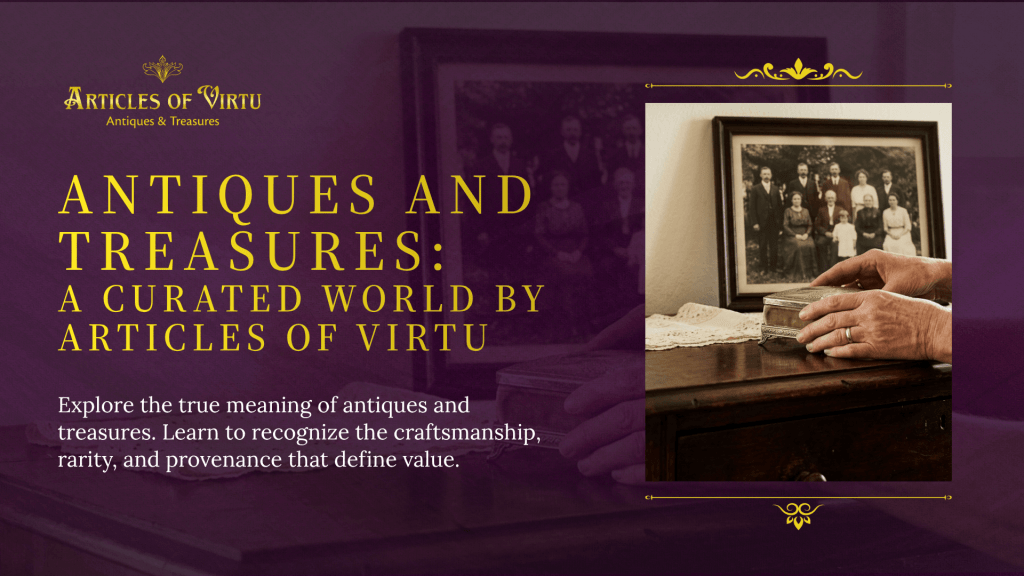
Antiques and treasures are defined by age, craftsmanship, rarity, and provenance—not trends. Understanding the difference between antiques, vintage items, and collectibles helps buyers make confident, informed decisions. With the right knowledge, collectors can acquire timeless pieces that offer both cultural significance and lasting value.
Antiques and treasures have long captivated those who appreciate beauty shaped by time. Whether displayed in a refined interior or preserved as part of a growing collection, these objects carry a depth that modern reproductions simply cannot replicate. In today’s fast-paced world, antiques and treasures offer something increasingly rare: authenticity, permanence, and quiet distinction.
At their core, antiques and treasures are not merely objects of age. They are reflections of craftsmanship, cultural heritage, and human artistry—pieces that have endured because they were made to last. Understanding what sets them apart is essential for anyone seeking to collect with confidence, decorate with intention, or invest wisely.
This guide explores the true meaning of antiques and treasures, helping you recognize their value and choose pieces worthy of being cherished for generations.
In the most traditional sense, an antique is typically defined as an object that is at least 100 years old. Yet age alone does not create significance. Antiques and treasures are distinguished by the quality of their materials, the skill of their maker, and the story they carry through time.
A treasure, on the other hand, transcends formal definitions. It is an object that possesses exceptional value—historical, artistic, or emotional. Many antiques are treasures, but not all treasures must be ancient. What unites them is a sense of permanence and purpose.
In modern collecting, antiques and treasures are appreciated not only for their past but for how seamlessly they enrich contemporary life.
Understanding terminology is essential for navigating the antiques market with clarity. For collectors interested in furniture specifically, understanding the evolution of English furniture provides valuable context for identifying period styles and craftsmanship.
Antiques are objects generally over a century old, valued for their historical importance and craftsmanship. Vintage items, while often beautiful and desirable, are typically younger—usually between 20 and 99 years old—and reflect the style of a particular era. Collectibles encompass a broader category, defined by desirability rather than age, and may include items produced more recently.
While all three categories can hold value, antiques and treasures stand apart for their enduring relevance and intrinsic quality. Knowing these distinctions helps buyers avoid confusion and make more informed decisions.
True treasures are never defined by age alone. Instead, they emerge from a convergence of qualities that elevate an object beyond the ordinary. Learn more about what qualifies an item as a true antique treasure here.
Craftsmanship plays a central role. Hand-finished details, superior materials, and techniques no longer widely practiced signal enduring quality. Rarity also contributes to value—objects produced in limited quantities or surviving in exceptional condition are naturally more sought after.
Equally important is provenance. An item with a documented history or notable origin gains depth and legitimacy, transforming it from a decorative object into a meaningful artifact. Together, these factors determine whether an antique becomes a lasting treasure.
Antiques and treasures endure because they represent more than personal taste. They embody cultural memory and artistic achievement, offering tangible connections to the past.
From a financial perspective, quality antiques often maintain or appreciate in value over time, particularly those with verified authenticity and historical importance. Unlike trend-driven decor, antiques are not subject to rapid obsolescence. Their appeal matures rather than fades.
For collectors and homeowners alike, this dual value—cultural and financial—makes antiques and treasures uniquely compelling assets.
While tastes vary, certain categories consistently attract discerning collectors. Fine furniture, decorative arts, silver, ceramics, and works on paper remain enduring favorites. Objects that reflect regional craftsmanship or specific historical movements often carry added significance.
Home décor antiques, such as mirrors, lighting, and architectural elements, have also gained renewed appreciation as homeowners seek authenticity and character in their spaces. Each category offers its own entry point into the world of antiques and treasures, allowing collectors to pursue pieces that resonate personally.
Recognizing quality requires both knowledge and patience. Start by examining materials—solid wood, hand-forged metal, and natural finishes often indicate superior construction. Signs of age should feel consistent rather than artificial, reflecting honest wear rather than deliberate distressing.
Construction methods reveal much about authenticity. Hand-cut joinery, irregularities, and subtle imperfections are often hallmarks of genuine antiques. Documentation and expert evaluation further provide reassurance, especially for significant purchases.
Above all, trust develops through experience. Working with knowledgeable professionals helps buyers refine their eye and avoid costly mistakes.
Even well-intentioned buyers can fall into common traps. One frequent mistake is prioritizing appearance over authenticity, choosing visually appealing pieces without understanding their origins. Another is over-restoration, which can diminish historical integrity and value.
Impulse buying also poses risks. Antiques and treasures reward thoughtful selection rather than haste. Taking time to research, ask questions, and reflect ensures each acquisition contributes meaningfully to a collection rather than becoming a passing indulgence.
Authentic antiques and treasures are best sourced through reputable dealers, established galleries, and curated collections that emphasize expertise and transparency. While online marketplaces offer convenience, they require careful scrutiny and informed judgment.
In-person exploration remains invaluable. Examining objects firsthand allows buyers to assess quality, condition, and presence—qualities difficult to fully capture through photographs alone. Trusted sources prioritize education and stewardship alongside acquisition.
The most meaningful antiques and treasures are those chosen with intention. Rather than following trends, consider how an object resonates with your personal values, your home, and your long-term vision. Pieces selected thoughtfully often become the anchors of a space or collection, gaining emotional significance over time.
Working with seasoned professionals can transform uncertainty into confidence. Thoughtful curation ensures each piece you acquire reflects discernment, quality, and enduring beauty—guiding you toward antiques and treasures that will be cherished for generations.
For collectors ready to explore antiques and treasures with confidence, contact us. Our expertise in sourcing, evaluating, and curating timeless objects provides the insight and support you need to make selections that endure in both style and significance. Begin your journey into a lifetime of refined, meaningful collections today.
An antique is typically defined as an object over 100 years old, valued for its craftsmanship, materials, and historical relevance.
High-quality antiques with verified authenticity often retain or increase their value, especially when properly cared for.
Examine materials, construction techniques, wear patterns, and documentation. Consulting experts adds further assurance.
Sensitive conservation is acceptable, but excessive restoration can reduce an item’s historical and monetary value.
Begin with education and trusted sources, focusing on quality over quantity and pieces that resonate personally.
Searching for antiques that tell a story? Connect with us to see our finest rare and collectible items.
Searching for antiques that tell a story? Connect with us to see our finest rare and collectible items.
Subscribe now to keep reading and get access to the full archive.